
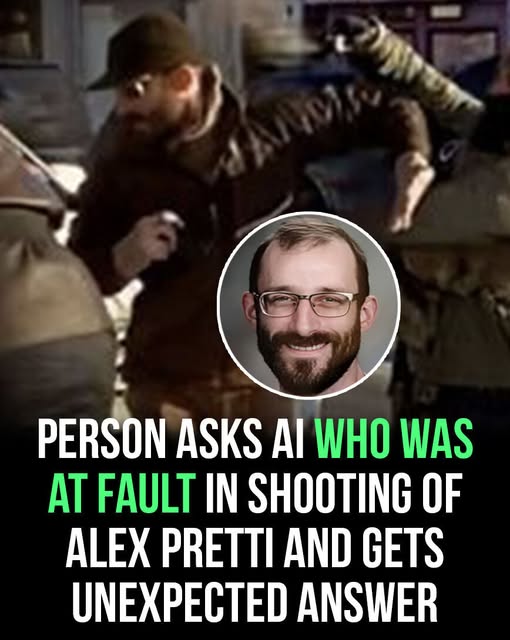
What began as another disputed shooting has become a referendum on truth itself. On one side stand federal officials and a president calling Alex Pretti a “domestic terrorist,” insisting agents fired in self-defense. On the other stands an AI system, calmly parsing pixels and timing, concluding that Pretti appeared unarmed, pinned, and not posing an immediate threat when he was shot. That clash between human narrative and machine inference has deepened public mistrust and turned raw video into a national fault line.
The fallout reaches far beyond one street in Minnesota. A judge’s emergency order to preserve every frame of evidence, nationwide protests, and even the NRA’s rare rebuke of the administration show how fragile consensus has become. The Pretti case now embodies a larger struggle: who gets to define danger, whose lives are protected, and whether technology will expose injustice—or be dismissed when it contradicts power.