
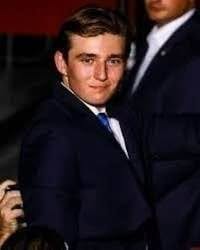
For nearly his entire life, Barron Trump was treated as a projection screen, not a person. His height, his walk, his silence became raw material for strangers’ fantasies and fears. Now, as he steps into adulthood, his message is unnervingly simple: you don’t own me. Not as a political symbol, not as an heir, not as the next chapter in someone else’s narrative. By defining his silence as strategy rather than emptiness, he exposes how much of his identity was invented by people who never heard his voice.
What makes his stance so disarming is its refusal to play the expected role. There is no promise of a dynasty continued, no dramatic rejection of his family, only a firm insistence on privacy, uncertainty, and self-determination. In a culture that rewards overexposure, Barron is choosing absence as power. He is stepping away from the script, not with a shout, but with a door quietly closing—and a future that, for the first time, belongs only to him.