
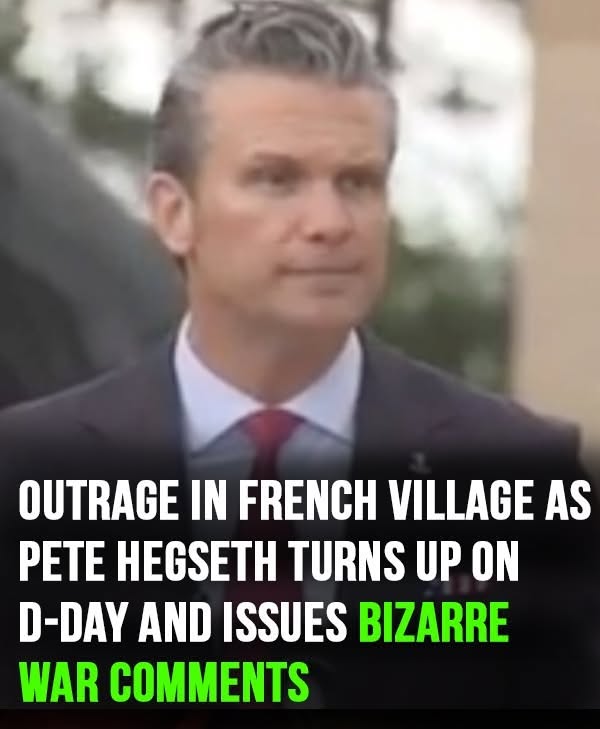
A wave of criticism erupted across parts of France after U.S. Defense Secretary Pete Hegseth attended ceremonies marking the anniversary of the D-Day landings and delivered comments that some local officials, veterans, and observers described as inappropriate for the solemn occasion.
The controversy began during commemorative events honoring the thousands of Allied soldiers who lost their lives during the historic June 6, 1944 invasion of Nazi-occupied France. The annual ceremonies traditionally focus on remembrance, international cooperation, and honoring the sacrifices made by troops from the United States, United Kingdom, Canada, and other Allied nations.
According to attendees, Hegseth’s remarks shifted beyond remembrance and included broader commentary about modern military conflicts and global security challenges. While supporters argued that his statements highlighted the continuing importance of military readiness, critics claimed the comments distracted from the purpose of the event and transformed a memorial gathering into a political platform.
Strong Reaction From Local Leaders
Several local leaders in Normandy expressed disappointment, saying D-Day commemorations should remain focused on honoring veterans rather than contemporary political debates. Some French commentators described the remarks as unusually confrontational given the emotional significance of the anniversary.
The Normandy region holds a special place in world history. Every year thousands of visitors travel to the beaches, cemeteries, and memorial sites where Allied forces launched one of the most significant military operations of World War II. For many residents, preserving the dignity of those ceremonies remains a deeply personal responsibility.
Veterans Weigh In
Veterans’ groups offered mixed reactions. Some agreed that military leaders have a duty to connect historical lessons to present-day security concerns. Others argued that remembrance ceremonies should avoid statements that could divide audiences or overshadow the sacrifices of those being honored.
One veteran organization released a statement emphasizing that D-Day represents courage, unity, and international cooperation. Members said the focus should remain on the generation that fought against tyranny rather than on current political disputes.
Debate Spreads Online
The incident quickly became a major topic on social media, where supporters and critics exchanged sharply different views. Supporters defended Hegseth’s comments as a reminder that freedom requires vigilance and strong defense policies. Opponents argued that the remarks were poorly timed and inconsistent with the solemn nature of the commemorations.
Political analysts noted that controversies surrounding public figures often become amplified online, especially when they occur during events carrying significant historical and emotional weight.
Historical Significance of D-Day
The D-Day invasion remains one of the most important turning points of World War II. More than 150,000 Allied troops crossed the English Channel and landed on the beaches of Normandy in a massive operation that helped begin the liberation of Western Europe from Nazi control.
Thousands of soldiers were killed, wounded, or missing during the assault. Their sacrifice is remembered annually through ceremonies attended by world leaders, military representatives, veterans, and families from around the globe.
Continuing Discussion
As debate over the remarks continues, many observers stress that the anniversary’s central message should not be lost. Regardless of political disagreements, D-Day remains a powerful symbol of sacrifice, courage, and the collective effort that helped secure freedom for millions.
For many attending the commemorations, the true focus remains unchanged: honoring the men and women who risked everything during one of history’s most decisive moments and ensuring their legacy is never forgotten.