
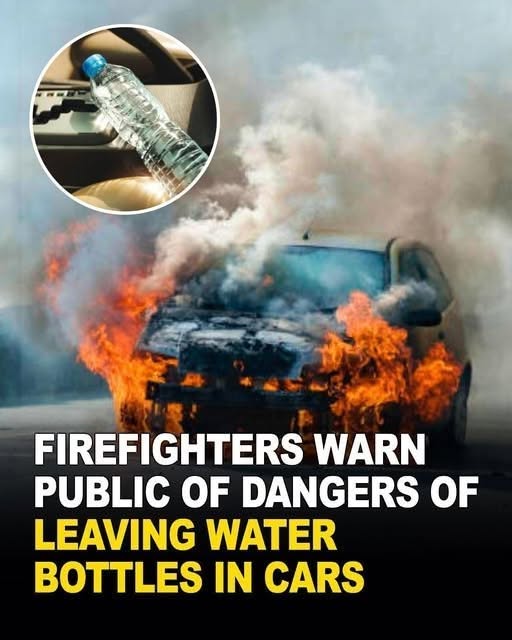
Fire departments and safety experts are renewing warnings about a surprisingly common habit that could create unexpected dangers during periods of extreme heat: leaving plastic water bottles inside parked vehicles.
As temperatures continue to rise in many parts of the country, firefighters say vehicles parked in direct sunlight can quickly become significantly hotter than the outside air. Under certain conditions, clear plastic bottles filled with water may act like magnifying lenses, concentrating sunlight onto nearby surfaces inside the vehicle.
Safety officials explain that this phenomenon can generate enough heat to damage upholstery, seat fabric, or interior materials if sunlight is focused on a single spot for an extended period. Although confirmed vehicle fires caused solely by water bottles remain relatively uncommon, firefighters emphasize that the risk is real enough to warrant caution.
The warning has gained attention after several fire departments shared demonstrations showing how sunlight passing through a water-filled bottle can create intense heat. Videos and photographs of scorched vehicle interiors have circulated widely online, prompting many drivers to rethink where they store everyday items during hot weather.
Experts note that modern vehicles already face elevated fire risks during extreme heat due to electrical systems, batteries, flammable materials, and prolonged exposure to high temperatures. Eliminating unnecessary hazards inside a vehicle can help reduce overall risk.
In addition to potential fire concerns, health specialists warn that plastic bottles left inside hot cars may be exposed to temperatures far above normal storage recommendations. Extended heat exposure can affect the quality of bottled water and may alter the taste over time.
Firefighters recommend removing water bottles when leaving a vehicle for long periods, especially during sunny summer afternoons. If drivers need to keep water in the car, experts suggest storing bottles in shaded compartments, insulated containers, or areas away from direct sunlight.
The warning serves as part of a broader summer safety campaign encouraging drivers to avoid leaving potentially hazardous items inside parked vehicles. Lighters, aerosol cans, power banks, electronic devices, and other heat-sensitive objects can also become dangerous when exposed to extreme temperatures.
Small Precautions Can Prevent Bigger Problems
Fire officials stress that most vehicle fires result from mechanical or electrical issues rather than water bottles. However, they argue that taking simple precautions can help minimize risks and protect both passengers and property.
As summer temperatures climb, experts encourage motorists to remain aware of how quickly conditions inside a parked vehicle can change and to remove unnecessary items that could contribute to safety hazards.