
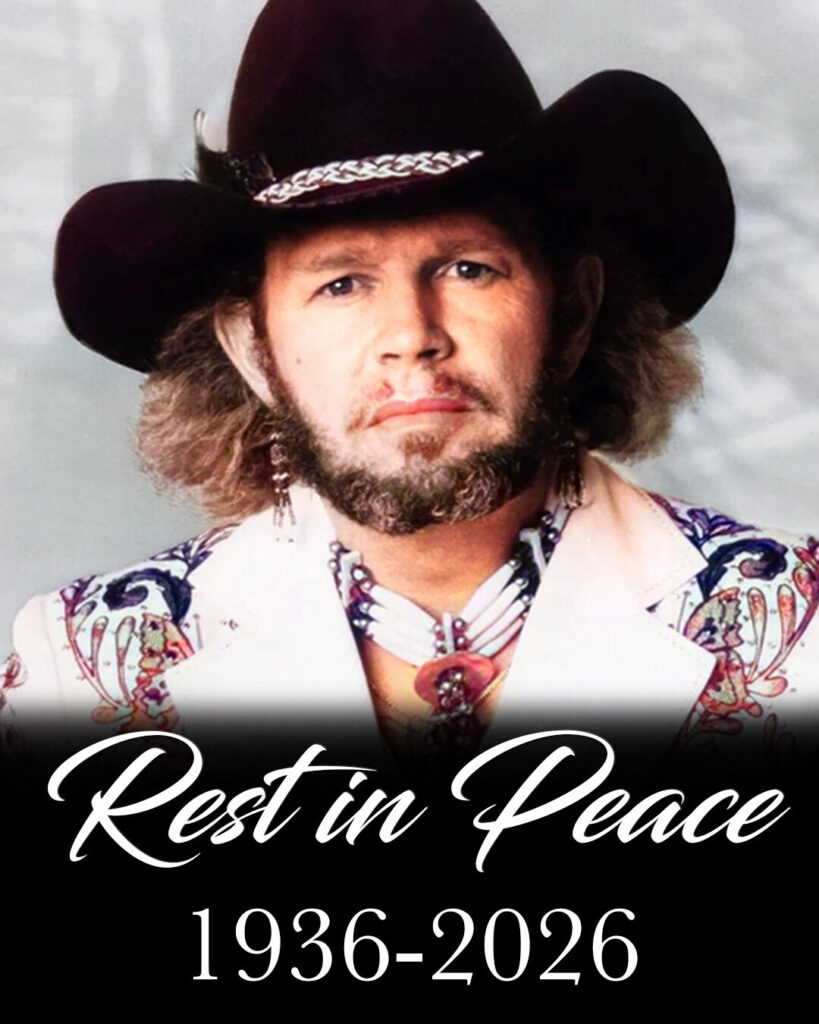
The world of country music has lost one of its most unforgettable and controversial figures. David Allan Coe, the singer-songwriter whose rebellious spirit helped define the outlaw country movement, has passed away at the age of 86. News of his death was confirmed on April 29, bringing an end to a remarkable career that spanned decades and left a lasting impact on American music.
Unlike many country stars who followed a traditional path to success, Coe’s journey was marked by hardship and defiance from the very beginning. Born in Akron, Ohio, in 1939, he spent much of his youth facing legal troubles and time in correctional institutions. Rather than hiding those experiences, he embraced them, turning his troubled past into a central part of his identity and artistic voice.
When Coe arrived in Nashville during the late 1960s, fame was far from guaranteed. He struggled to gain recognition and spent years establishing himself as a songwriter before finding widespread success. His breakthrough came when Tanya Tucker recorded his composition “Would You Lay With Me (In a Field of Stone),” which became a major hit and introduced his songwriting talent to a national audience.
That success opened new opportunities and eventually led him into the spotlight as a recording artist. In 1974, he released his debut album, “The Mysterious Rhinestone Cowboy,” introducing listeners to a style that blended traditional country themes with a rebellious attitude rarely seen in mainstream Nashville. The following year brought “Once Upon a Rhyme,” featuring the song that would become one of his signature recordings, “You Never Even Called Me by My Name.”
Coe’s music stood apart because of its honesty, humor, and refusal to follow convention. His deep, distinctive voice and storytelling ability allowed him to connect with audiences who felt overlooked by polished commercial country music. Songs such as “Longhaired Redneck” and “Willie, Waylon and Me” became anthems for listeners who identified with the outlaw spirit.
His influence extended beyond his own recordings. Coe wrote “Take This Job and Shove It,” which later became a massive hit for Johnny Paycheck. The song captured the frustrations of working-class Americans and remains one of the most recognizable country songs ever recorded.
Although his greatest commercial success came during the 1970s, Coe continued recording and performing throughout the following decades. His 1983 album “Castles in the Sand” featured “The Ride,” another fan favorite that demonstrated his enduring ability to tell compelling stories through music.
Yet Coe’s legacy was never without controversy. Certain albums released during his career contained material that many considered offensive and inappropriate. Critics argued that some of his work crossed lines that could not be justified, while supporters claimed he was using shock value and satire. Regardless of interpretation, those projects generated criticism that followed him for the rest of his life.
His personal life also included legal and financial difficulties. In later years, he faced tax-related issues that resulted in legal consequences and further complicated his public image. Even so, he never completely stepped away from music and continued performing for dedicated fans who appreciated his authenticity and refusal to conform.
Away from the stage, Coe eventually found stability in his personal life. He married Kimberly Hastings in 2010 and remained active as an artist for many years afterward. He leaves behind his wife, children, and a catalog of music that continues to influence generations of country performers.
David Allan Coe’s story is one of contradictions. He was admired as a gifted songwriter and respected as a pioneer of outlaw country, yet frequently criticized for controversy and conflict. What cannot be denied is his impact on the genre. He challenged expectations, ignored conventions, and built a career entirely on his own terms.
Long after the debates surrounding his life have faded, his songs will remain as a testament to a musician who refused to fit neatly into anyone else’s definition of what a country artist should be.